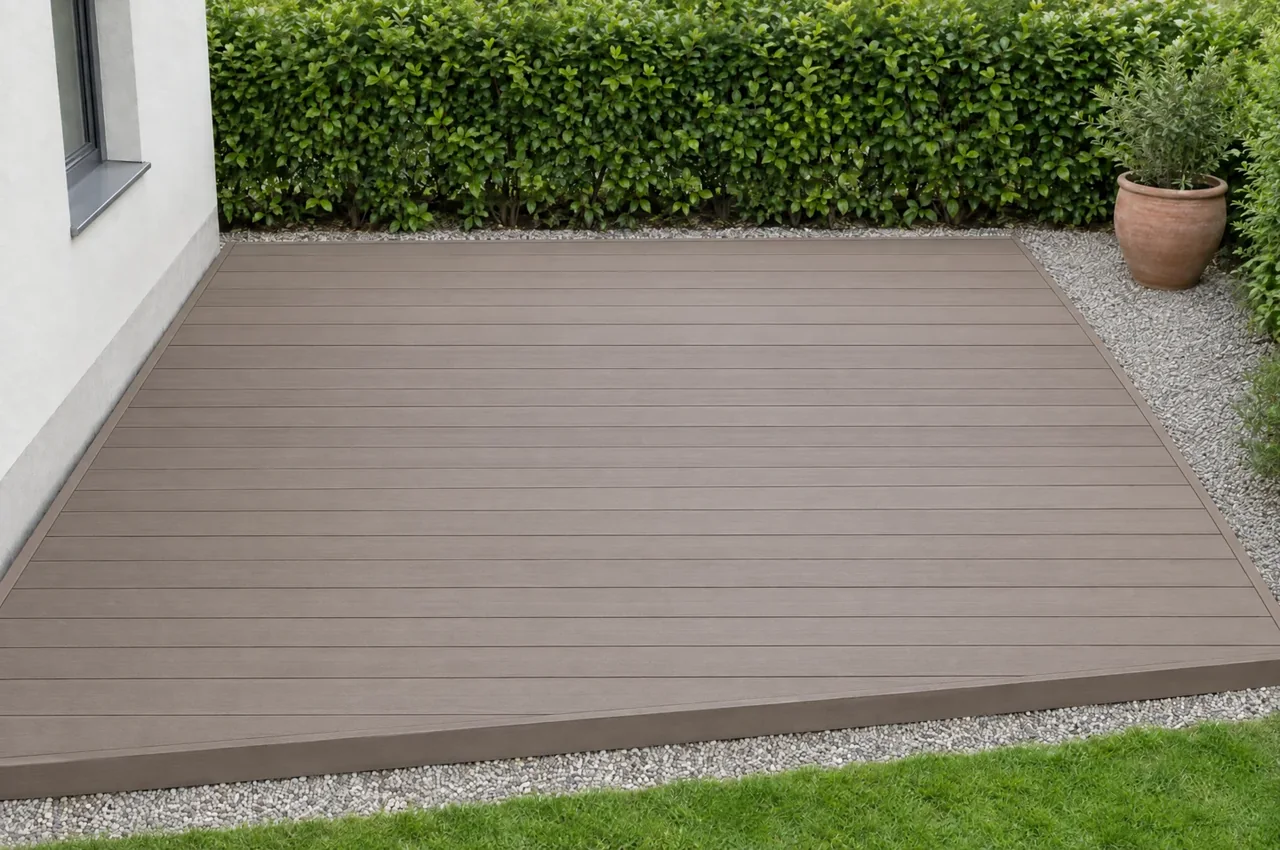
A small deck shown with uniform gray board surfaces.
Illustrative ownership context. Appearance is not a service-life prediction; costs and replacement events come from the scenario inputs.Confirm what the quote includes
Record the specific PVC product and all included components. The visible deck surface is only part of the ownership inventory. Railing, stairs, accessories, and the supporting structure can represent separate cost questions. Do not allow a surface-material description to erase those questions. Ask whether both alternatives cover the same finished project before attributing an initial premium to PVC alone. The cost-method reference supports comparing defined cash flows; it does not verify the properties, cleaning requirements, or lifetime of any PVC product.
Use product-specific cleaning assumptions
Obtain the care instructions for the actual surface before pricing a cleaning service. Borrowing another material's method is not a sound basis for an estimate. The budgeting task is to define a compatible scope, not invent a universal PVC care schedule. Record supplies, paid labor, and whether accessories are included. Keep owner time separate from cash unless you intentionally create an effort-valued scenario. Attach notes to the inputs so a saved comparison remains understandable when reopened. Revisit the allowance when the selected product or service scope changes.
Define a possible replacement event narrowly
If you want an allowance for possible surface work, describe which area or components it covers. Keep localized repair distinct from full replacement. Preserve the original color, profile, and purchase information so a provider can identify the product later. Do not assume future availability or invent a surcharge with no evidence. Add separately dated accessory or structural events when relevant and inspect their ledger entries. No event year verifies a material lifetime. A residual credit requires its own explanation and should not silently stand in for an assumed resale gain.
Hypothetical whole-project inventory
An owner enters $18,000 initially and $180 annually for ten years, then tests a $1,100 event in year eight for a separately described component. The undiscounted total is $20,900. Omitting that component produces $19,800, which is a narrower scope rather than demonstrated savings. All figures are invented; the event does not predict a PVC failure or an expected repair interval.
Common questions
Does a PVC surface mean the whole deck has no care costs?
No. Identify the care responsibilities of the actual surface and the other components included in your project.
Can I use the same cleaner allowance as composite?
You may arrive at the same amount, but first check the actual service scope. Equal inputs should be a documented conclusion rather than an automatic shortcut.
Evidence & limits
Reviewed September 13, 2026. Sources support their stated technical principles; this site's workflows and hypothetical examples are not product tests, supplier approvals or independently reviewed project records.