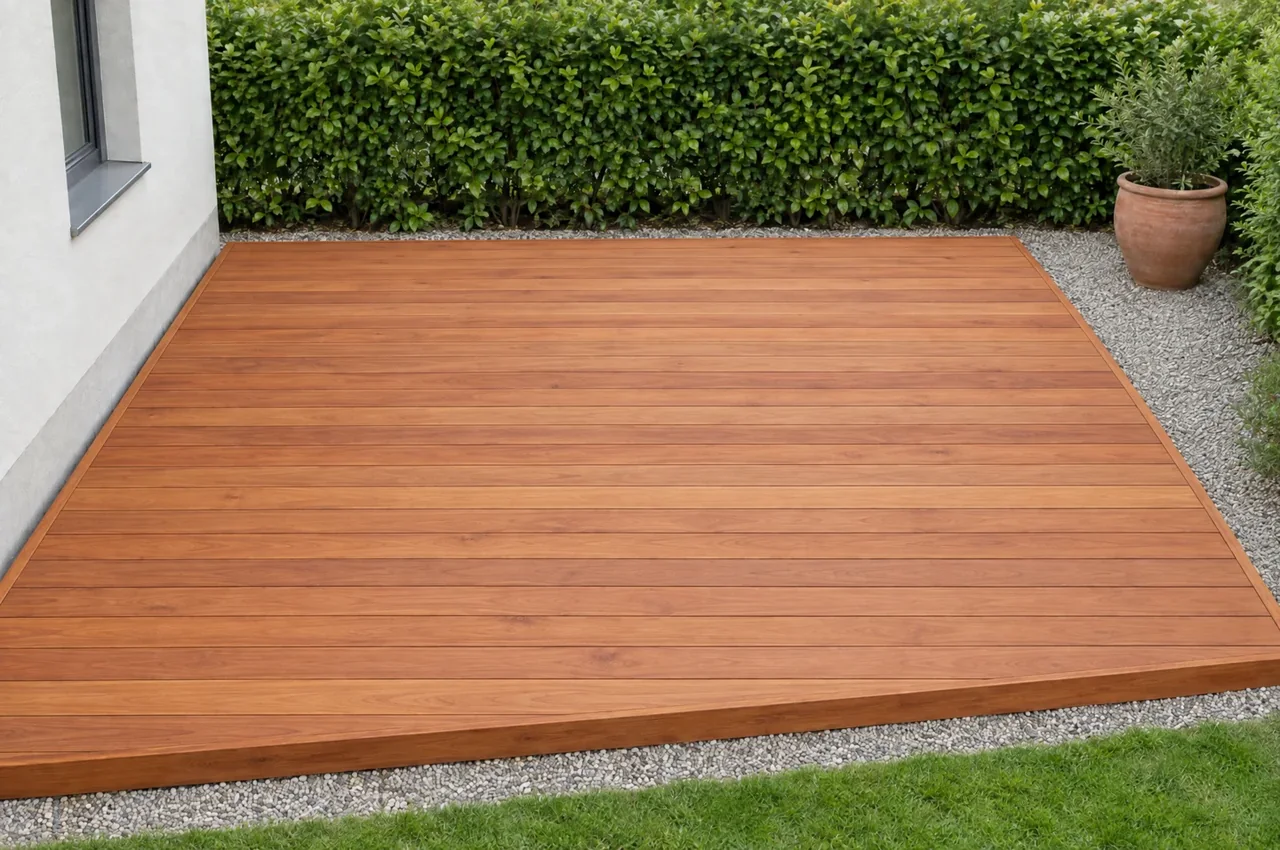
A small deck shown with warm reddish board surfaces.
Illustrative ownership context. Appearance is not a service-life prediction; costs and replacement events come from the scenario inputs.Save the finish specification
A redwood cost scenario should identify the quoted lumber and the finish, if any, that the owner intends to maintain. Different finish choices create different planning questions. Save the exact finish name and application record when available. For an existing deck with an unknown coating, obtain a scoped assessment before assuming a new product can simply be applied over it. USDA's finishing chapter is general technical background, not a redwood product specification. This guide concerns ownership costs rather than instructions for choosing or applying chemicals.
Ask what renewal work includes
Ask whether a service covers ordinary cleaning, removal of an existing coating, color restoration, or only a new coat. These are different deliverables and should not inherit one generic allowance. Keep preparation and paid labor explicit so a lower quote does not conceal omitted work. If you choose owner labor, record hours separately. Do not lift a renewal interval from a general exterior discussion and apply it automatically to a particular horizontal deck. Use the current condition and documented service scope to explain the event dates you select.
Keep appearance and component work distinct
Your willingness to accept a changed appearance can influence the services you choose, but it does not diagnose the condition of boards or the supporting structure. Use separate dated events for restoration and possible component work when both matter. Keep their individual dates and source notes instead of combining them into an unexplained amount. Review event markers to see which costs fall within the ownership period. A residual credit is optional; leave it at zero unless you can explain the value being credited and avoid counting the same benefit elsewhere.
Hypothetical restoration allowance
A redwood scenario has $11,000 initially, $250 annually, and a separate $1,500 restoration event in year six. Over ten years at zero percent, it totals $15,000. If a revised scope makes the event $2,200, the total becomes $15,700. The $700 change is attributable to the event alone. These figures and timing are invented, with no claim about typical redwood expenses.
Common questions
Can a supplier's maintenance language replace a quote?
No. It helps identify work to discuss. Your project amount still needs a quote, record, or clearly labeled personal allowance.
Should every redwood scenario have the same finish budget?
No. Document the chosen finish, intended appearance, exposure assumptions, and who performs the work before comparing costs.
Evidence & limits
- USDA Wood Handbook, Chapter 16 — general wood-finishing principles, not product care schedules
- NIST Handbook 135, 2025 — cost-method reference, not material performance or prices
Reviewed September 13, 2026. Sources support their stated technical principles; this site's workflows and hypothetical examples are not product tests, supplier approvals or independently reviewed project records.